

The damage is invisible until someone plugs it in
Faulty electrical equipment is one of the most common causes of workplace fires and electric shock – and unlike most hazards, the damage is usually invisible until someone plugs it in.
The Electricity at Work Regulations 1989 require employers to maintain electrical systems and equipment so far as is reasonably practicable to prevent danger. A programme of user checks, formal visual inspection, and combined inspection and testing is the recognised way of demonstrating that duty is being met.
The Electricity at Work Regulations 1989 require you to maintain electrical equipment so far as is reasonably practicable to prevent danger.
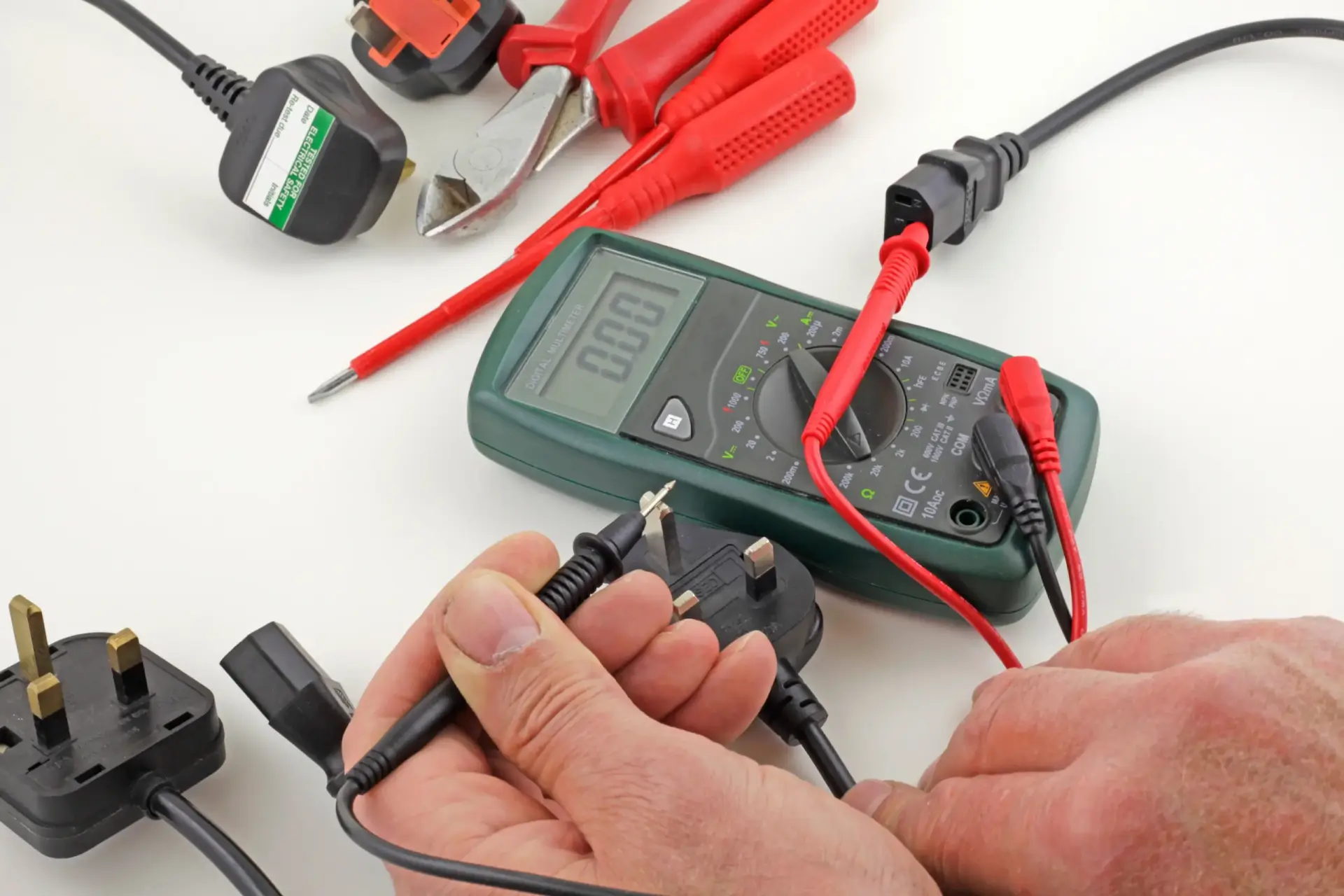
A recognised way to prove the duty is being met
Faulty equipment is a leading cause of workplace fires and electric shock, and most faults give no warning. A documented programme of checks, inspection and testing protects your people – and evidences your compliance.
Electricity at Work Regulations 1989
Reduces fire & electric shock risk
Finds faults you cannot see
Evidence for insurers & accreditations
Demonstrates your duty is being met
Protects staff, contractors & visitors
Invisible faults, real consequences
A damaged cable or failing appliance rarely announces itself. Regular inspection and testing is how those faults get found before they start a fire or injure someone.
Scoped properly, inspected before it’s tested
We test what genuinely needs testing, at a frequency that suits how it’s used – and we inspect before we test, because that’s where most faults are found.

-
We agree what's in scope
We identify which equipment needs testing and how often - based on its type, the environment it's used in, and how heavily it's used.
-
We determine appliance class
Establishing whether each item is Class I, II or III, which in turn determines the tests that need to be carried out.
-
We carry out a competent visual inspection
A formal visual inspection done properly catches a large share of faults - damaged cables, cracked casings, poor repairs - before testing begins.
-
We test and interpret the results
The relevant test types are carried out on each item, and we interpret what the readings actually tell you about its condition.
