Management

Accident and Near-miss Tool

Overview The newly released Accident and Near-miss Tool helps organisations reduce the burden of managing incident records while ensuring compliance with the Reporting of Injuries, Diseases and Dangerous Occurrences Regulations (RIDDOR). It automates the collection of accident and near-miss records, allowing teams to filter by location, type or theme (for example, slips, stress or musculoskeletal disorders).…

Accident and Near-miss Tool Read More »

‘Relationships’ are one of the 6 main causes of stress at work.

Although dealing with conflict can be something many people actively seek to avoid, new research shows that people rarely regret trying informal approaches.  Last month Acas published independent research exploring how workplace conflicts are managed informally. It found that when done well and used appropriately, informal resolution offers a lot of benefits: preserving relationships reducing stress it cost less than formal procedures.Even…

‘Relationships’ are one of the 6 main causes of stress at work. Read More »

Ladders and Stepladder

Ladders and stepladders are not banned under health and safety law. The law calls for a sensible, proportionate approach to managing risk, and ladders can be a sensible and practical option for low-risk, short-duration tasks, although they should not automatically be your first choice. There are simple, sensible precautions you should take to stay safe when using portable leaning ladders and stepladders in the workplace.…

Ladders and Stepladder Read More »

Accident & Investigations

HSE news and information

COSHH training course: Practical assessment and control 8 and 9 July, HSE Science and Research Centre, Buxton HSE’s 2-day training course provides detailed and practical training on carrying out COSHH assessments and implementing controls. Delegates will be provided with information that will help them to: identify which substances are hazardous and understand the risks from over exposure understand the COSHH regulations and what they mean in practice complete COSHH assessments and action plans understand the principles of good control practice, including the hierarchy of control and reliability understand how to reduce exposure by process change and substitution choose and use effective local exhaust ventilation (LEV), respiratory protective equipment (RPE) and personal protective equipment (PPE) Book your place Visit our website to find out more details, view prices and book your place: COSHH: Practical assessment and control8 and 9 July, Buxton Protect those working alone Lone workers can be at greater risk of harm as they may not have anyone to help or support them if things go wrong.…

HSE news and information Read More »

Protect your workers from stress – assess the risks and act on them

April is Stress Awareness Month and HSE has a range of resources and information to help employers protect workers from stress at work. The law requires all employers to prevent work-related stress to support good mental health in the workplace.  The need to protect your workers from work-related stress, depression and anxiety falls under the provision sections 2 and 3 of the Health and Safety at Work Act 1974.  …

Protect your workers from stress – assess the risks and act on them Read More »

School Academy Trust fined £300,000 after student death

A school academy trust has been fined £300,000 after a 19-year-old student died as a result of a ‘series of management failures’. Owen Garnett, who was described by his family as having “an incredible sense of humour” and who had “everything to live for” died two days after choking on a paper towel at Welcombe Hills School in Stratford-upon-Avon on 9 January 2023.…

School Academy Trust fined £300,000 after student death Read More »

25 years on from the UK’s final asbestos ban, the material remains the biggest cause of work-related deaths

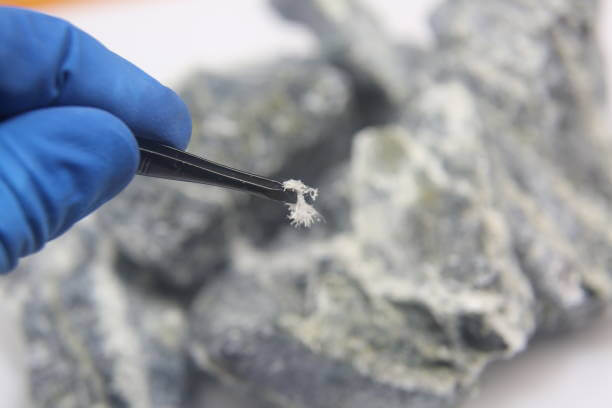
This month marks the 25th anniversary since legislation came into force across Great Britain and in Northern Ireland (the UK) making it illegal for anyone to buy, sell, import or export any materials containing asbestos. Laid before parliament in August 1999, but brought into force on 24 November of that year, the Asbestos (Prohibitions) (Amendment) Regulations 1999 extended existing controls to include all remaining asbestos containing materials, notably Chrysotile (white) asbestos; legislation in 1985 had banned the importation of Amosite (brown) asbestos and Crocidolite (blue) asbestos, which are more hazardous to human health.…

25 years on from the UK’s final asbestos ban, the material remains the biggest cause of work-related deaths Read More »

Monthly Update, night drawing in, stress management, legionnaires disease

Keep safe at work as the nights draw in At this time of year surfaces can be perilous, which means slips and trips accidents are are likely to become more frequent. Poor lighting, excess water from rain and even wet and decaying leaves can all cause slip and trip accidents to increase significantly.…

Monthly Update, night drawing in, stress management, legionnaires disease Read More »

Working at Height

Employers and those in control of work at height must first assess the risks. Before working at height you must follow these simple steps: avoid work at height where it is reasonably practicable to do so where work at height cannot be easily avoided, prevent falls using either an existing place of work that is already safe or the right type of equipment minimise the distance and consequences of a fall, by using the right type of equipment where the risk cannot be eliminated You should: do as much work as possible from the ground ensure workers can get safely to and from where they work at height ensure equipment is suitable, stable and strong enough for the job, maintained and checked regularly not overload or overreach when working at height take precautions when working on or near fragile surfaces provide protection from falling objects consider emergency evacuation and rescue procedures How to check your ladder is safe before you use it Before using a ladder, you should have access to user instructions from the manufacturer in case you need to refer to them.…

Working at Height Read More »

Scroll to Top